Monday, February 04, 2008

There's a Rat on Mi Bird Table, What Am I Gonna Do?

Ratatouille rateDad (Bill in Ballaugh) has been enjoying feeding the birds and watching them from his kitchen window. But he phoned me up for advice when he saw a rat helping itself to the bird food.

The chances are he's always had rats in his garden. He just hasn't spotted one before. He lives on a hillside in rural Ireland, surrounded by small dairy farms. The landscape will be full of rats, and it's OK. It's probably also full of field mice, foxes, squirrels, bats, rabbits, hares and all sorts of lovely things. If he saw any of those in his garden he'd be delighted, but he's not so keen on the rat. I don't blame him - if I saw a rat I'd wonder if it might come in the house, where it definitely would not be welcome. I wouldn't welcome squirrels or bats etc. in the house either. But still, I don't think spotting a rat in your garden is cause to panic.

There's no need to stop feeding the birds. But there are steps he can take to try to make sure the birds get the food and the rat does not:

  • Feed on the bird table, not on the floor.

  • Rat-proof the bird table - an inverted cone of metal or chickenwire, or one of those big round tins you get chocolates in at Christmas, inverted and attached round the post, might stop rats climbing up.

  • Only feed enough for one day. Feed in the morning, and clear up any leftover food at night. Birds don't come to the birdtable at night so this doesn't deprive them of anything. But it deprives the rat of a midnight snack. I know dad saw his rat in the daytime, but it could have been visiting the table at night for weeks before he saw it.

  • I wonder if those squirrel-proof bird feeders also keep rats out? I've seen a spinning bird-feeder - the weight of a squirrel or a rat causes it to spin faster and faster, flinging the unwanted mammal right off. The video is hysterical. I think if I had one I'd be praying for squirrels and rats to vsit it, just for the laugh.

New Blogs

Romany caravans at Bunratty folk parkThere's been a fabulous response to the Start a Blog Challenge.

So far 5 people have clicked on "I've started a new blog" in the Start a Blog challenge poll (in the right-hand sidebar). But only two have told me where to find their blogs:

Ilex started Homesteading in a Condo, and Grant is writing Grant's Rants.

Lisa promises to start a blog soon. Be sure to tell us where to find it, Lisa.

And several people have told me about blogs they already had. Some of them I knew about already, and some were new to me.

Suzanne writes The Tale of my Allotment. Wicked Gardener writes Wicked Gardener. The Shopping Sherpa writes The Shopping Sherpa. Sandra writes Sandra's Garden. Kethry writes Urbania to Stoneheads. VP writes Veg Plotting. Benjymous writes Grapefruitopia. Martian writes Life on Mars. The Crafty Gardener has a whopping four blogs - The Gardener Side of Crafty Gardener, Sow then Grow ... by Crafty Gardener, The Crafty Side of Crafty Gardener and Crafts & Swaps for Guiding Members. Heather T is also a multi-blog blogger, writing Tinky McFrog (a knitting blog) and Make A Bag (which does exactly what it says on the tin). Heather says:

Make A Bag gets a couple hundred visitors per week, but very few returns and even fewer comments. I'd love it if people would go over and leave me a comment about the site!

Green Digit Media runs Best Green Blogs, a directory site for green blogs, natch. You should all submit your blogs there to help increase your own readership, and to join in the community of green bloggers.

Blotanical has also been mentioned. It's a gardening directory site, so if your blog is about gardening submit it there as well. Of course you can also use Best Green Blogs and Blotanical to find other great blogs. Reading other people's blogs and responding to them is all part of this community of bloggers. If you don't already have a blog of your own, I challenge you to start one and join the community. Tell us where to find it by leaving a comment, and don't forget to vote in the poll in the right-hand sidebar.

Sunday, February 03, 2008

Review: Seasons of Love

Manchester Lesbian and Gay ChorusI went to a concert by the Manchester Lesbian and Gay Chorus last night. A friend of mine was thinking of joining them, and wanted to go to the concert to check them out. She asked me to go with her, and I'm really glad she did because we had a great night.

They are a community choir, which means you don't have to audition to join, and they perform a much lighter repertoire than my usual choir, St George's Singers. Last night's concert included numbers such as Don't It Make My Brown Eyes Blue, Can You Feel The Love Tonight (from Disney's The Lion King) and Diamonds are a Girl's Best Friend.

They have a lovely sound, beautifully blended, and I was very impressed how well they maintained pitch considering they performed a capella (without accompaniment) and they are not trained singers. They sang with lots of energy and sensitivity, helped by the fact that they learn all their music by ear since most of them do not read music. This meant they all kept unbroken eye contact with their conductor, professional choral trainer Jeff Borradaile, who used exaggerated changes in dynamic and tempo to add vitality and interest to the music, and the choir followed him perfectly.

Interest was also added by the choir occasionally splitting into smaller groups - a group of 9 men (The Cocquettes) and a group of 7 women (The Sapphonics). There were also two spoken monologues during the evening, which added variety to the evening.

They seem to be a friendly, tight-knit group who have a lot of fun. This, coupled with the great quality of the singing, convinced my friend that she did indeed want to join them. As we chatted to people in the bar after the concert I was invited to join too, but I don't actually qualify. And in any case I do something else on Monday evenings, when they rehearse. But I'm looking forward to attending more of their concerts to support my friend when she joins.

I think my favourite piece last night was Ysaye Barnwell's For Each Child That's Born. Some of the lyrics are:
We are our grandmother's prayers
We are our grandfather's dreamings
We are the breath of the ancestors
We are the spirit of all.

Cartoon by Climate Cartoons. Click on the panel to see the complete strip.

cantankerous frank cartoon panel

Saturday, February 02, 2008

New Chickens Settling In

two Rhode Island Red chickensNow that I've doubled my flock of chickens, I need to top up the water and the food twice as often, and muck out the hen house and the run more often. However I don't need to collect the eggs more often, as they're still not laying properly. Since Monday I've had 4 eggs, and 3 of those were from the new girls (I can tell them apart because the new girls' eggs are smaller and sort of elongated).

I knew that introducing new birds would unsettle all the chickens, but I'm sure they'll return to laying an egg a day soon. I'm just surprised that my old ladies are more unsettled by it than the new girls. They're still all avoiding each other. I'll let you know the first time I get four eggs in a day.

Friday, February 01, 2008

Start A Blog Challenge

blogger.com homepageFebruary's challenge is to start a blog. How is that going to save the planet? Because it influences other people. Something I wrote persuaded 32 people to buy a battery recharger and use it. Maybe more - perhaps some people bought a charger but didn't vote in the poll. That's pretty incredible.

When I started blogging about 18 months ago I just wanted to keep an allotment journal, and like a true geek I thought it might as well be an online journal. To my great surprise it turned into much more than that. I found myself part of an online community of bloggers about allotments, bloggers about the environment, bloggers about crafts, frugality, gardening, cooking and lots of other topics. They commented on my posts, and linked to them from their own blogs. I then visited their blogs to leave comments and read their posts, and often found interesting things to write about myself, and of course to link back to the original source.

Some of the things I do, in the back of my mind I'm thinking "There could be a good blog post in this". Maybe I'd have said "no" to some of these things if it wasn't for the extra incentive of writing about it on Bean Sprouts. So blogging has introduced me to new experiences. And some of the things I do have sprung directly from blogging, such as buying two colonies of bees and beekeeping equipment from Ally (who writes the blog Ducking for Apples).

I think the blogosphere is something really important (well I would, wouldn't I)? But seriously - not so long ago you had to be Rupert Murdoch to publish something that could be read by millions of people worldwide. Not that millions of people read Bean Sprouts. But they could. They're on the internet so this content is freely available to them. And they could read your thoughts and opinions too.

Your thoughts and opinions don't have to be earth-shattering. It doesn't matter. But they're yours, so write them down and put them out there in cyberspace. If people like what you write, your readership will grow. If they don't like what you write, well, it didn't cost you anything anyway (blogging is free unless you choose a service that charges). But there are so many people on the internet, there's bound to be someone who likes what you do.

If you're shy, you can be anonymous. There isn't really someone called Marvin the Magnificent. That's a pen name (surely it is ...) Just one warning - even if you use a pen name, I still wouldn't advise bitching about your company.

You don't have to write about the environment. I'm not telling you what to write about. If you want to write about how Bean Sprouts is full of sh*t and climate change is a load of hooey, go ahead. Write about whatever is important to you, even if it seems very mundane. Write about what excites you. Write about whatever is meaningful for you.

So that's February's challenge. Start a blog. Please vote in the poll in the right-hand sidebar. And leave a comment telling me about your blog. I'll visit it, I promise, and I'll write a post linking to it later in the month.

Piecing Together the Scraps

I have a book called Zen and the Art of Quilting. Someone bought it for me as a joke, but it's true that when you're creating a quilt something funny happens to your brain and you enter a trace-like state in which deep and philosophical ideas come to you.

I was thinking about this scrap quilt I'm making. The components are scraps (hence the name). Tiny pieces of fabric, some only an inch square, left over from other projects. These were the pieces that weren't wanted. The bits left over. And I'm taking them and turning them into a new quilt. I'm making something beautiful and functional and meaningful (I intend to give the quilt as a gift when it's finished) out of rubbish that should have gone in the bin.

It's frugal. It's recycling. It's good for the planet. But that's not what struck me.

What struck me was the idea that this rubbish has become elevated into something very precious indeed. I identified with these little odd-shaped pieces of fabric. I wondered if they felt happy to have been saved from the rubbish bin. If they felt proud to become part of a beautiful gift, something that will (I hope) be cherished and used for many years. Were they sad when they were rejected from the other quilts, when neigbouring bits of fabric were used but they were tossed on the floor? Do they feel grateful to have been redeemed?

See what I mean about "something funny happens to your brain when you're sewing"?

When I identified with the scraps in this way, I mused about my own life. About the times when I felt like a failure, when I felt rejected. But after these experiences came other times when I succeeded and was honoured. And I thought about the passage in the Bible that says "The stone that the builders rejected has become the cornerstone". Maybe there's no such thing as a failure, and there's always another chance to be a success. Maybe there's no such thing as a scrap, only fabric for another quilt. Maybe there's no such thing as rubbish, only material for a different use.

Rechargable Battery Challenge Results

Rechargable Battery Challenge Pie ChartAt the beginning of January I challenged Bean Sprouts Readers to get a battery recharger and use it instead of buying disposable batteries which contain all kinds of nasty substances and should never be thrown into landfill.

A record-breaking 119 people voted in the challenge poll, which is really amazing. The votes were as follows:


  • I've gone green! I've got a battery recharger 32 votes (26%)
    I was already green! I always use rechargable batteries! 79 votes (66%)
    I don't want to! I love my copper-tops! 2 votes (2%)
    I'm greener than thou! I don't use devices that need batteries! 6 votes (5% )
If it's really true that 32 people went out and bought battery rechargers because of Bean Sprouts, then I am absolutely thrilled. Keep on using them, and you'll save money, save energy, and keep dangerous chemicals out of the landfill.

A new challenge for February will be posted soon.

Thursday, January 31, 2008

The Rubbish Diet

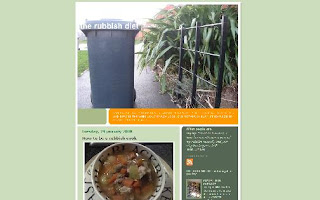
therubbishdiet.blogspot.com front pageRegular Bean Sprouts commenter 21st Century Mummy has a new blog - The Rubbish Diet. She's aiming to slim her bin to a size 0 by Zero Waste Week, commencing on 10th March 2008, and the blog is all about her family's quest to do just that.

As well as interesting and funny blog posts about her wheelie bin's weight loss programme, she also has a great collection of links to recycling and zero-waste websites. Check it out!

Wednesday, January 30, 2008

Scrap Quilt

sewing patchesMy scrap quilt is coming along nicely. It's not a quick project. Quick quilts inevitably mean large blocks and minimal sewing. Sewing lots of teeny tiny pieces inevitably takes a lot of time. It's a common trade-off. Usually being frugal takes more time. It takes longer to microwave a ready meal than to cook a meal from scratch.
Updated at 19:23 - of course I meant it takes longer to cook a meal from scratch than to microwave a ready meal. Doh!
But the home-cooked meal is cheaper, tastes better, is healthier and has less impact on the environment. Sometimes though time is at a premium (when you're busy making a patchwork quilt, for example), and ready meals become an attractive option. Ed made Hollands pies and oven chips for dinner the other night, so I didn't have to stop sewing to make something proper, and I was extremely grateful.

January Bird List

nuthatch sketchBirds I have seen from my house in January 2008:
  • Great tits
  • Starlings
  • Blue tits
  • House sparrows
  • Robins
  • Crows
  • Magpies
  • Blackbirds
  • Jays
  • Dunnocks
  • Wrens
  • Woodpigeons
  • Treeful of long-tailed tits (about 8 or so tits in an oak tree)
  • Great spotted woodpecker (only saw him once)
  • Gulls (dunno what sort, I don't do gulls)
  • Herons
  • Nuthatch (just saw him once, but he hung around for ages so I got a good look at him)
  • Chaffinch (male, I only saw one)
That's 18 species, which isn't bad for the middle of winter. I'll start a new list in February, and note which species I see again, which I don't see again, and any new species I spot.

Tuesday, January 29, 2008

Saoirse's Freeconomy Pilgrimage

Saoirse starting his pligrimageSaoirse, the chap who came up with the Freeconomy idea, begins a pilgrimage tomorrow from Bristol to Porbandar in India without any money. He'll be relying on the kindness and generosity of people who hasn't met yet to get about four-and-a-half-thousand miles.

I have no idea if he'll make it, but I'm interested to see if he does. I'm also curious to know what he'll have to do to make it work, and what we can learn from watching him, so I'll be following his journey on his blog.

I Believe...

Rebecca eating a dumblieI believe our leaders have become too short-sighted. Everywhere I look I see us creating problems for generations to come.

We are using up all the fossil fuel, so there will be none left for our children. And by burning the fossil fuel we are increasing atmospheric CO2 levels which will cause severe climate problems in our children's generation.

One proposed solution to this is to build nuclear power stations, which generate electricity with lower CO2 emissions. But there is still no good solution to the storage of nuclear waste containing isotopes with half-lives of hundreds of thousands of years. And there are serious questions about the security of transporting and storing both waste and fuel rods now that international terrorism has become a fact of life.

The fuel companies have been pushing biofuels as a "green" alternative to fossil fuels. But from the beginning the green movement has been saying biofuels can never replace fossil fuels. For a start, even if we used every productive acre of arable land on Earth we could not grow enough biofuel to replace the fossil fuel we use at present. And anyway, if we used every productive acre of arable land on Earth, where would we get our food from? Most biofuel produced presently comes from palm oil, which is a whole bad kettle of fish.

Short-sightedness isn't just evident in our energy policies. Conventional farming methods which rely on over-use of pesticides and herbicides are killing our native plants and animals. Other conventional farming techniques such as over-ploughing and monoculture (producing the same crop year after year for mile after mile) cause unsustainable soil erosion. Conventional farmers compensate for this by adding artificial fertilisers. But when the soil is eroded completely our children or grandchildren will not be able to produce food by adding fertiliser to bare rock or sand.

Everywhere I look I see evidence of short-term thinking. The list would become too long and too political if I let all the bees out of my bonnet. The way we run our industries. The way we house our population. The way we fund our health service. The way we treat our children. The way we manage foreign affairs. They are all based on putting off problems until the future. Our children will have reason to damn us for the legacy we are leaving them. It makes me ashamed.

The Iroquois chiefs were required to make every decision by considering the effects on the seventh generation to come. I believe we urgently need to adopt this way of thinking. Urgently.

Monday, January 28, 2008

New Chickens

two red hensMy neighbour, Maria, came around yesterday to offer us two chickens. She has seven, and two of them don't get on with the other five, who bully them. She thought they might get on better with my two, since the numbers are equal. It's worth a shot.

She brought them round at dusk and we shoved them in the coop. The four sleepy chickens clucked softly at each other a bit, but soon settled down. By the time they were fully alert (well, as alert as chickens get) they had already been together 12 hours and so were somewhat familiar and less inclined to fight. They're a bit "This is our corner of the run and that can be your corner" but they're not actually battling each other. I think they'll be fine.

Maria says the new chickens are Rhode Island Reds. I'm no breed expert, but that looks about right to me. They hatched last April and so haven't been laying very long. A hen only has so many eggs in her before she stops laying, so it's good to get them young. Ours are a couple of years old now, and sooner or later they'll stop laying, although they're still very good layers and have laid all through this winter which is great.

I'm not expecting any eggs at all for a few days until the four of them settle in together, but then we should have 4 eggs a day, which is more than we eat. I plan to sell the surplus, to pay for the chicken feed. Then the eggs we eat will be free, in effect. Free eggs, free-range organic eggs as well. You can't complain about that.

Sunday, January 27, 2008

Quilting Bug

quilt blocksI haven't done any patchwork and quilting for ages now, but the other day the bug bit me and I pulled out all my stash and spread it over the living room floor. I came across a bag of scraps, some of them only an inch square, given to me a while ago by friend. She and I had started sewing them into 6.5" square blocks, but I had put them away and done no more. I decided to resume this project.

In the last couple of days I have doubled the number of blocks, and have decided how I'm going to "set" the blocks (arrange them into a pattern). I know how big the finished quilt will be and who it is for (shhh, it's a secret). I don't know what I'm going to do about borders yet, and I've only got the vaguest idea about backing, and don't even ask me about the quilting until it's all put together.

It's a proper thrift quilt, made almost entirely from fabric I already have, left over from other projects. I'm going to have to buy the batting (stuffing) for it, but I hope I can do all the rest from my stash.

Saturday, January 26, 2008

Big Garden Birdwatch

Big Garden Birdwatch logoThis weekend is the RSPB's annual Big Garden Birdwatch. You're asked to spend an hour watching birds in your garden and then submit your results to the RSPB, using their online recording sheet. Last year 400,000 people took part, which makes it the world's biggest bird survey. It's serious scientific research, providing valuable information about British birds:

The survey has recorded the huge declines in some of our most familiar birds. Since 1979, the number of house sparrows counted has fallen by 52% and the number of starlings by 76%.

However, it isn't all bad news - chaffinchs and great tits have both seen their numbers increase since 1979 by 36 and 52 per cent respectively.

Our scientists can then use these patterns in bird numbers to help prioritise our bird conservation work.

Why not spend an hour this weekend watching the birds, and help contribute to this vital research?

Cartoon from the talented and curiously attractive chaps at Climate Cartoons. Click on the panel to read the full strip.

Cartoon chocolate fireguard

Friday, January 25, 2008

Haiku Explained

winter treesA number of people have contacted me asking for an explanation of the haiku I was so impressed with. So I'll explain how I read it:

so suddenly winter - I took this at face value. The author has experienced a sudden onset of winter, perhaps waking up to find everything covered with snow, although the weather had been mild previously.

baby teeth at the bottom
of the button jar - I know from experience the poignancy of coming across baby teeth you've kept. It brings memories of the children when they were very young, and leads you to compare how big they are now, although it seems only yesterday you swapped these teeth for money "from the tooth fairy" and stored them carefully in the button jar.

Then I had an "aha" moment. In the light of the poignant baby teeth in the button jar, I re-evaluated the first line of the haiku "so suddenly winter". Perhaps the author isn't commenting on a sudden onset of wintry weather, but a sudden feeling of having become old, a sudden awareness of how long it is since these teeth were stored away.

And that's what made me catch my breath.

Now I look at the four paragraphs it took to explain that, and I know I will never write a good haiku. But I do enjoy reading them.

Get Started Growing Vegetables

I received an email from Hazel of Living and Mothering in the Chilly Northeast:

I've been promising Thomas (7) for ages we'd grow our own vegetables, I really couldn't face a completely new project last year as the baby was such hard
work so I told him *definitely* this year, and I haven't a clue where to
start!

I have a little garden, about 7 foot by 25 foot or so, with a raised bed, unfortunately a lot of it is in the shade most of the day. I don't mind using some or all (eventually!) of it for vegetables.

Where do I start?! I have no experience of gardening we never did anything like that when I was a kid, I've tried putting in the odd flowering whatever since we moved here with varied success, the very hardy stuff made it the other stuff died!

Thanks for any input!
The two most important things to remember are 1) start small and 2) have early success. In other words don't set yourself up for failure. Make things easy for yourself.

Climate - You live in "the chilly Northeast" and your garden is in shade most of the day. That's going to be a tough place to grow vegetables. You can forget Mediterranean veg, such as tomatoes, bell peppers, tomatilloes, sweetcorn (not Mediterranean, but definitely hot climate) and so on. I wouldn't attempt herbs either, especially things like thyme and rosemary which are also Mediterranean plants, although we tend to forget it. To make allowances for your situation, add about a week to the earliest planting date on any packet of seeds you buy. If you have a sunny window ledge in your house you might get more success starting seeds in pots indoors, and only putting them in your garden when they are looking fairly big and healthy.

You don't mention your soil. Is is dark and crumbly and fertile? Does it drain well? Or is it sandy and poor, dusty and thin, clayey and heavy? Does it tend to get waterlogged and stand in little puddles? Now is your opportunity to get your soil sorted out before the growing season begins. You also don't say how big your raised bed is. Assuming it's not titchy, I'd start there.

Drainage - if your raised bed drains well, you can go on to the nest step. But if it tends to get waterlogged you need to sort that out. There should be a layer of rubble in the base of the bed, ideally covered with membrane to make sure the earth doesn't clog it up. Did you construct the bed yourself? Do you know what is in there? There should also be holes in the bottom course of brickwork (or whatever the bed is constructed from) to allow water to drain away. Make sure these holes are not blocked up.

Soil - Buy a load of well-rotted manure (not fresh manure - if you can get that, do so, but pile it up in a corner of the garden and let it rot for a year before you use it). Your local garden centre is a good place to start looking for well-rotted manure. Pull any weeds out of your raised bed, and their roots. For now, take the weeds off the site - your council may have a facility to compost them, but don't try to compost them yourself until you can identify perennial weeds from annual weeds, and you can build a compost heap that will get hot enough to kill seeds and diseases. Alternatively you could make them into weed tea, home-made plant food for your veggies. Fork the manure well into your raised bed - if the soil ends up standing in a heap in the middle of the bed, that's well and good. This will provide a naturally fertile growing medium for your crops.

Crops -Suitable crops for your situation (cold, shady) include
  • spinach
  • radicchio (a tasty salad leaf)
  • radishes (definitely grow these - they come up really fast and are trouble-free. They'll give you an encouraging taste of success. Such a shame they're not more useful, just a tasty addition to a salad rather than something you can build a meal around)
  • potatoes (can take a lot of space. Try them in a potato barrel instead of in your raised bed)
  • peas
  • runner beans
  • dwarf beans
  • parsnip
  • onions
  • lettuce (these actually prefer shade)
  • leeks
  • kale
  • garlic (don't try planting garlic from the greengrocer or supermarket - get it from a seed catalogue or a specialist seed garlic producer and look for cold-climate varieties)
  • chard
  • celery
  • cauliflower (will grow in your conditions but it's a tricky plant and not really good for a beginner)
  • carrots (if your raised bed is deep enough for them to put out long roots, otherwise go for a short or a spherical variety. The raised bed will be helpful in deterring the blasted cabbage root fly)
  • cabbages
  • Brussels sprouts
  • broccoli
  • beetroot
  • asparagus (it's a long-term project - if you establish a bed this year you'll begin really cropping in 2011)
Other - Do you have a water butt in your garden, so you can collect rainwater to water your crops? Do you have a compost heap to get rid of healthy plant material and kitchen waste, and turn it into extra fertility for your garden next year? Do you have a weed tea bucket?

When you've got more experience you can try branching out. You might want to try things I've said won't work. That's fine - you'll probably prove me wrong on some of them. And you might want to give over more of your garden to vegetables. You might even feel like getting a couple of chickens. But for your first season I'd stick to things that have a high chance of success.

Thursday, January 24, 2008

Winter Haiku

I've been reading some books of poetry recently. I don't know very much about poetry; I can't tell a good poem from a bad poem. But sometimes when I read a poem it makes me catch my breath. This one did.

so suddenly winter
baby teeth at the bottom
of the button jar
--Carolyn Hall (Water Lines, Snapshot Press, 2006)

(found at Wikipedia's entry for Haiku)

Wednesday, January 23, 2008

Greenhouse

geodesic greenhouseIt's the time of year to make plans and dream big. Inspired by an Alternative Kitchen Garden podcast, I've fallen in love with these geodesic greenhouses. Geodesic structures are extremely cool, and it would be perfect in our north-facing garden because it catches solar energy from whichever direction it comes, not just from one long wall like a rectangular greenhouse. But I'm pretty sure I can make one myself without paying over a thousand pounds for a kit. I have some grand plans involving bamboo canes and polytunnel sheeting. Watch this space.

Tuesday, January 22, 2008

Moon After Yule

January full moonIt's a full moon tonight, but I doubt I'll see much of it as the sky is covered with a thick layer of cloud. It's a shame, as it's the first full moon of 2008 and I'd like to say "Hi". Never mind, there will be eleven more full moons this year.

You might want to collect your water for mead-making tonight. At my beekeeping course last night the instructor mentioned an old myth that mead (honey wine) should be made with water collected by moonlight. He joked that it must be the reason his mead didn't turn out well, and said he'd have to wait for the next full moon to collect his water. Obviously he didn't know it would be a full moon tonight, and I didn't tell him because I had already asked lots of questions about bee genetics and didn't want to be the annoying kid in the class who always has their hand up with some question or comment.

Thanks to Kerrdelune for the stunning photo.